
Massage & Body
Sport Cupping
Sport cupping uses suction cups on the skin as a form of bodywork, often asked about by people who carry muscle tension or keep an active routine. Roly arranges it directly and confirms the type of cupping, session details and whether it suits you.
Contact for details
Roly arranges sport cupping directly. Call or text to ask about it; it is not booked through Square.
What sport cupping is
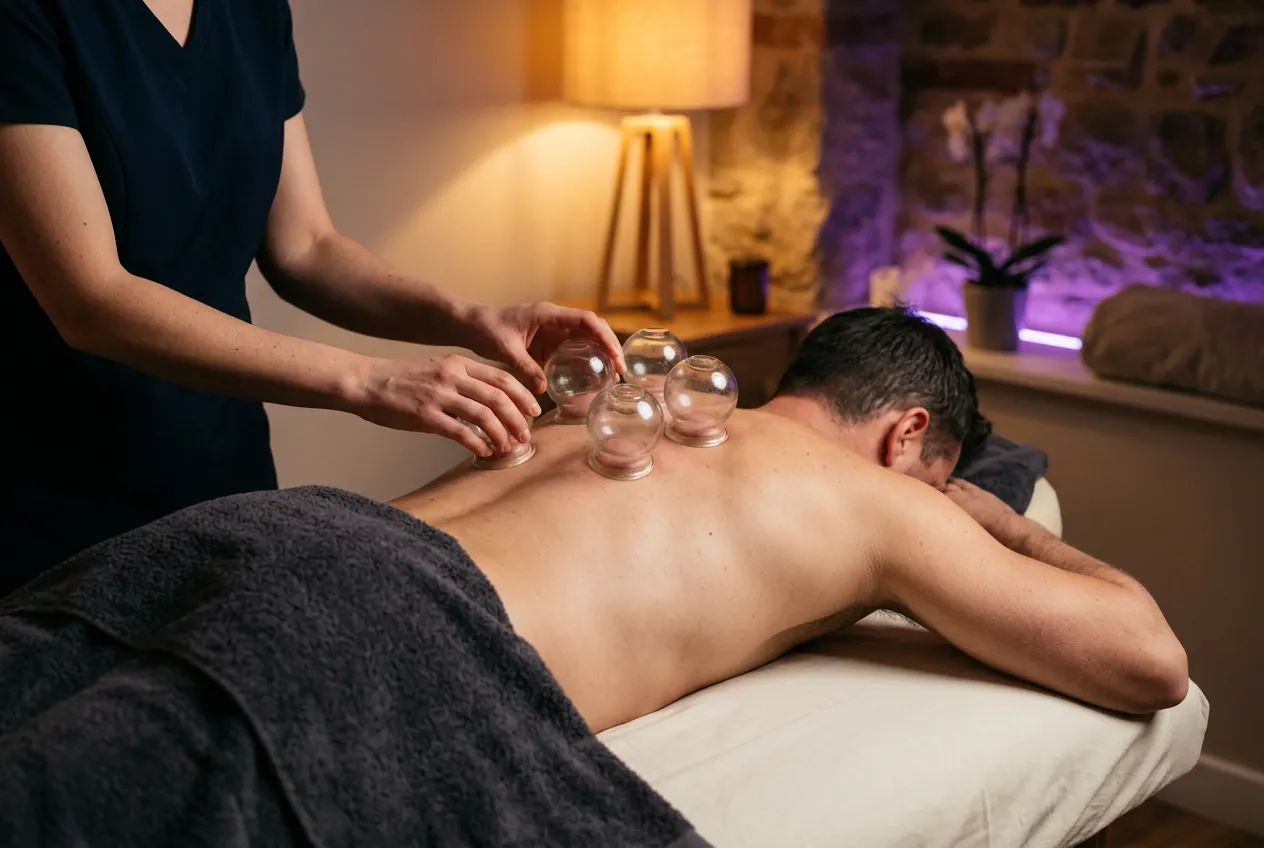
Cupping is a bodywork technique in which cups are placed on the skin and suction draws the skin and the tissue just beneath it gently upward into the cup. It has a long history in several traditional practices and is now often asked about by people who are physically active or who carry muscle tension.
In general, sessions involve placing one or more cups, often on larger areas such as the upper back and shoulders, and leaving them for a short time. Cupping methods vary, so Roly confirms the type of cupping he offers, what a session involves and whether it is suitable for you before anything is arranged.
Why people ask about it
Muscle tension
Many people seek cupping because they feel tight through the back, shoulders or neck and want a different kind of bodywork.
Active routines
People who train, play sports or do physical work sometimes ask about it as part of how they look after their bodies.
Realistic expectations
Research on cupping is limited and mixed. Some people find it feels relieving, but it is not proven to heal injuries, speed recovery or improve performance.
Is it right for you?
What it’s intended to address
- A pulling or suction sensation on the skin while the cups are in place; some people find it relaxing and others find it intense.
- Round, temporary marks where the cups sat, which can range from pink to darker red or purple and usually fade over several days.
- Possible tenderness in the area afterwards, similar to the feeling some people have after deep bodywork.
- The marks are a normal response to suction. They are not toxins leaving the body and are not proof that the treatment worked.
Before you choose it
- Tell Roly about any medications you take, especially blood thinners, and any bleeding or clotting conditions, before scheduling.
- Mention skin concerns in the area, such as broken, irritated, sunburned or fragile skin, as well as recent injuries or surgery.
- Share relevant health conditions, including pregnancy, diabetes, heart conditions or anything you are being treated for.
- Cupping is not a substitute for medical care. For pain, injury or an ongoing health concern, check with a healthcare provider first.
General information drawn from NIH National Center for Complementary and Integrative Health and Cleveland Clinic public guidance. It isn’t medical advice, and experiences vary from person to person.
Questions people ask
What does cupping feel like?
Will it leave marks?
Is sport cupping right for me?
How is cupping different from a massage?
How do I arrange a session?
Curious about sport cupping?
Call or text Roly to talk it through. He'll confirm suitability, details and timing directly.